

COCOPEAT BUYER GUIDE
Washed vs Buffered Cocopeat: Which Grade to Order
Raw coir pith carries sodium and potassium from the coconut husk. Washing lowers those salts. Buffering goes a step further: it replaces the sodium and potassium held on the pith with calcium, so the medium does not pull calcium and magnesium out of your feed in the first weeks. This guide explains the three grades and what to write on your order.
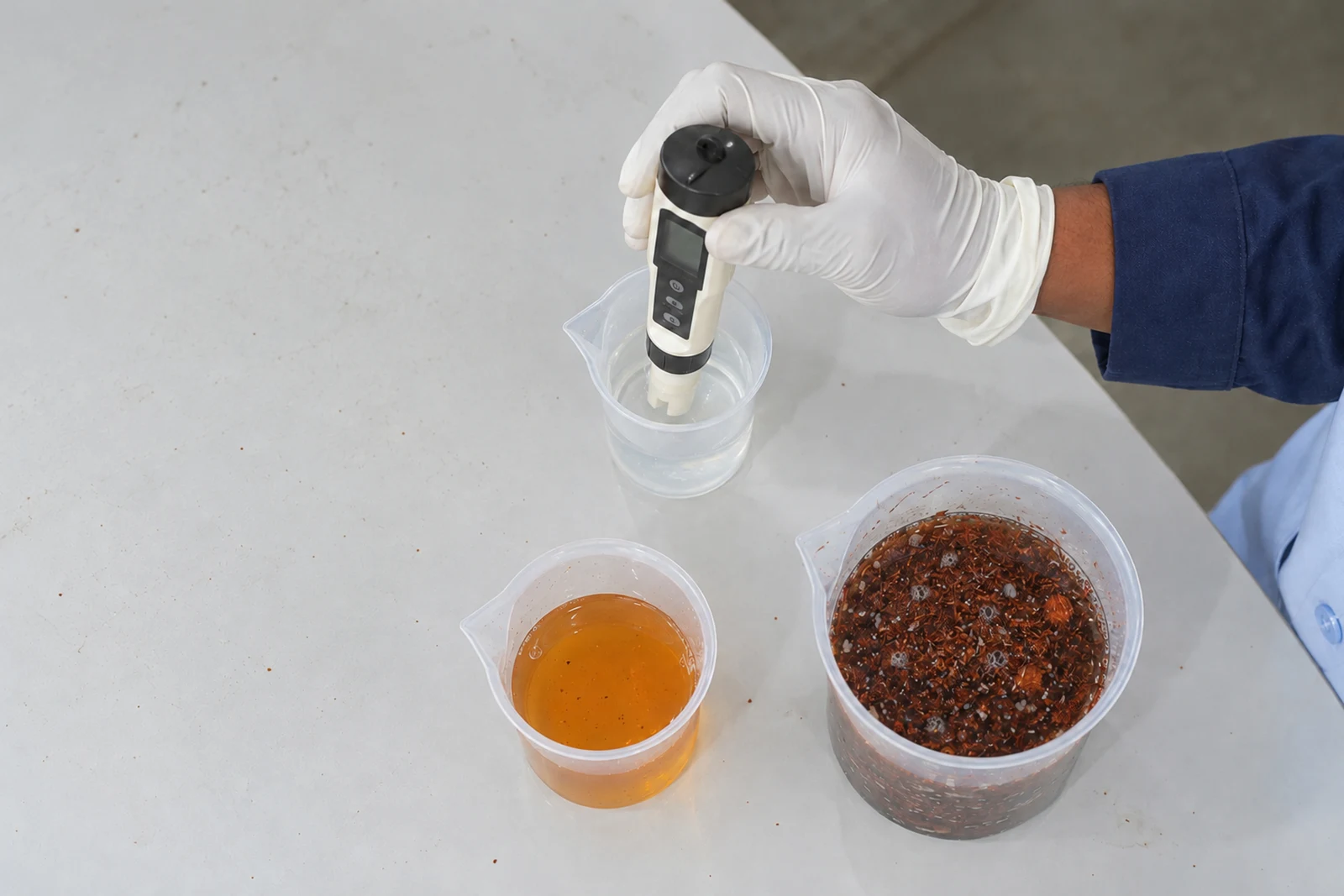
EC check on a cocopeat sample before packing
WHERE IT FITS
Match the grade to the crop and the feed.
SPECIFICATION BEFORE PRICE
How the three grades compare.
Buffered cocopeat
Washed (low-EC) cocopeat
Unwashed (high-EC) coir pith
pH for washed and buffered coir pith normally falls between 5.5 and 6.8. State your EC limit, pH range and test method (1:1.5 volume extract or saturated paste) on the enquiry so the batch is checked against the same method you use.
BUYER VIEW
Test a hydrated sample before you order a container.
Expand a sample in clean water, take an extract and read EC and pH. Then soak part of it in your own nutrient solution and test the solution again: a well-buffered sample changes it very little, while an unbuffered one takes calcium and magnesium out. Send us your target EC, pH and test method and we match the batch to it.
BUYER QUESTIONS
Before you place an order.
Do I need buffered cocopeat for hydroponics?
For drip-fertigated grow bags and slabs, buffered cocopeat is usually the better choice because it does not take calcium and magnesium out of your feed in the first weeks. If you buy washed cocopeat instead, plan a calcium nitrate soak before planting.
What EC should washed cocopeat have?
There is no single standard. Many buyers specify below 0.5 or below 1.0 mS/cm on a 1:1.5 extract. Tell us your limit and test method and we confirm it for the batch before shipment.
Can I buffer cocopeat myself?
Yes. Soak the expanded medium in a calcium nitrate solution, let it stand, then rinse and check the runoff EC. It adds labour and water on your side, which is why most hydroponic buyers order it already buffered.
AVEE BUYER DESK